Where to start with AI in a traditional company: the 5 use cases with provable ROI
If you run an established company and feel like the conversation about AI is pure noise, this guide is for you: the five use cases where artificial intelligence generates measurable return in a traditional operation, and the right order to implement them.

Getting started with artificial intelligence in a traditional company doesn't begin with buying tools: it begins by identifying the processes where AI generates measurable return — customer acquisition, repetitive operations, scattered knowledge, after-hours service, and document generation — and prioritizing them with a measurement baseline. This guide explains the five use cases we evaluate first in any diagnosis, how to recognize whether they apply to your operation, and where the return on each one is measured.
The problem isn't a lack of options, it's too many
If you run an established mid-sized company, the conversation about AI reaches you every day: business forums, the board, vendors offering licenses, employees experimenting on their own. The most common result isn't transformation — it's paralysis. Hundreds of tools, zero selection criteria, and isolated internal initiatives that no one measures. Meanwhile, the pressure is real: more agile competitors are using AI to operate at lower cost and respond faster. The way out isn't trying more tools. It's identifying, with business judgment, where AI has proven return in YOUR operation — and starting exactly there.
What makes a use case have provable ROI?
An AI use case has provable return when it meets three conditions: there's a measurable baseline before implementation (hours invested, response time, conversion rate), the process is repetitive with clear rules (it doesn't require expert judgment at every step), and the result impacts a metric leadership already monitors (operating cost, commercial speed, service capacity). If an AI project can't be described in those terms, it isn't a project yet: it's an experiment.
The 5 use cases a traditional company starts with
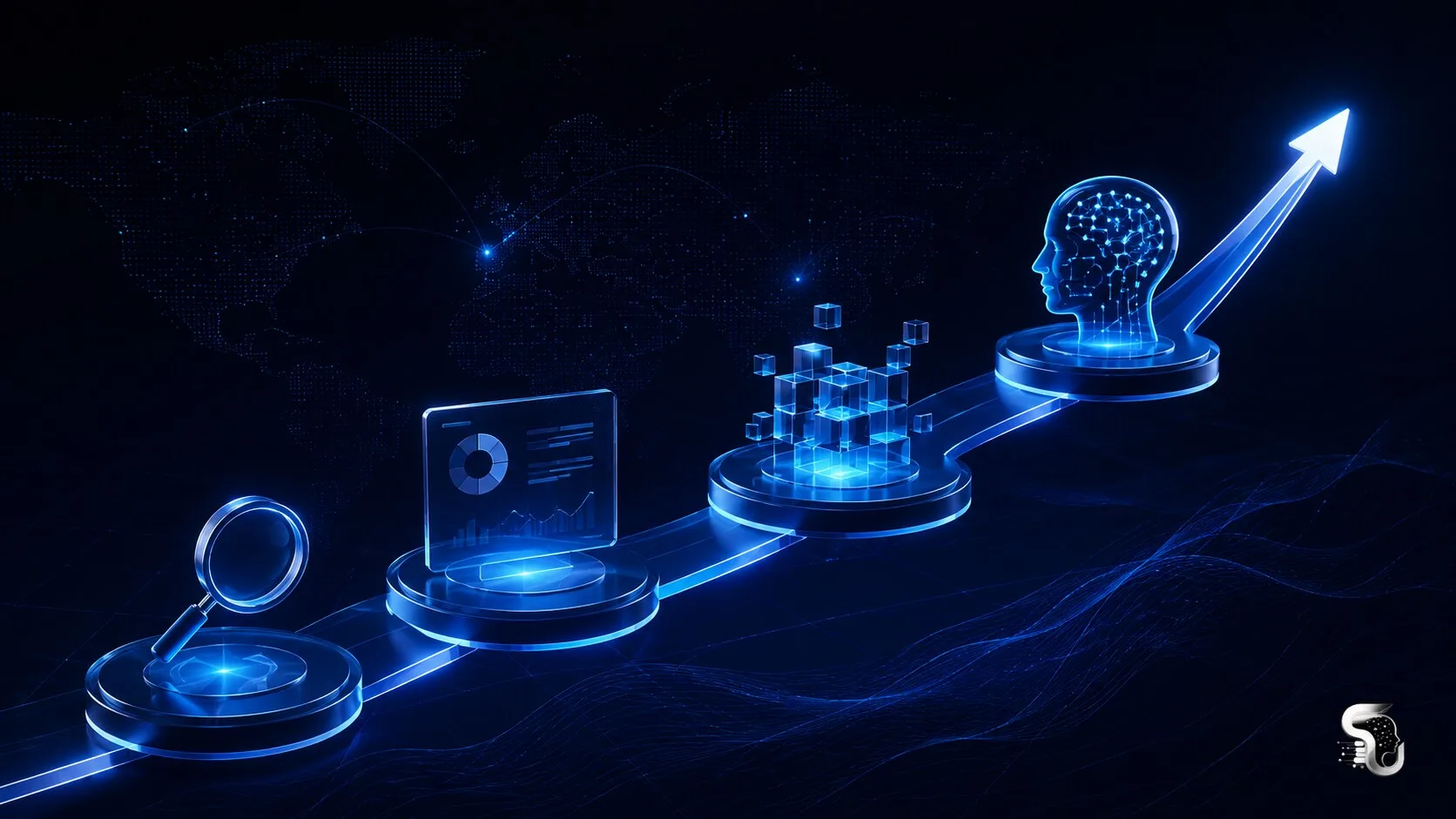
- 1 · Lead capture and response. Sign it applies: prospects wait hours (or days) for a first response, and no one knows how many are lost. AI classifies each lead by intent and urgency, responds instantly, and assigns it with context. ROI measured in: first response time and effective contact rate.
- 2 · Automation of repetitive back-office work. Sign: your team copies and pastes data between systems, builds reports by hand, and answers the same internal questions every week. Flows built with n8n or Make connect the tools you already have. ROI measured in: weekly hours recovered per area.
- 3 · Searchable company knowledge (RAG). Sign: information lives in PDFs, emails, and the heads of key people; every internal search takes minutes or hours and onboarding a new employee takes months. A private assistant connected to your documents answers with verifiable citations. ROI measured in: internal search time and onboarding duration.
- 4 · Customer service with a supervised assistant. Sign: a significant share of your inquiries arrive after hours or pile up on WhatsApp unanswered. An assistant trained on your catalog handles, filters, and schedules; sensitive cases escalate to humans. ROI measured in: volume handled after hours and cases resolved without intervention.
- 5 · Automated quotes and documents. Sign: quoting or generating operational documents (orders, certificates, reports) takes days and concentrates errors. Quoting engines and intelligent document processing cut the cycle to minutes. ROI measured in: commercial cycle time and document error rate.
The order matters more than the ambition
The executive's temptation is to attack all five fronts at once. The method we apply at jsadsAI is the opposite: an executive diagnosis defines the baseline, prioritizes one or two cases by impact and feasibility, and implements them with human supervision at the critical points. Each case that goes into production finances — in internal credibility and freed-up capacity — the next one. That's how you build a transformation the board can follow with numbers, not promises. And there's one rule we don't negotiate: if the process is broken, it gets organized and documented first; automating chaos only makes it fail faster.
What starting with AI is NOT
Starting with AI is not buying licenses for the whole team "to see what happens," nor delegating the vision to whichever vendor shows up, nor launching a chatbot because a competitor has one. Nor is it replacing human judgment: in the systems we design, critical decisions — financial, legal, people-related — always keep human checkpoints. AI is operational infrastructure; the strategy remains yours.
Frequently asked questions from executives
- Does this apply to a traditional industry like manufacturing, distribution, or healthcare?
- Yes — precisely because these are operations with repetitive processes, documents, and intensive customer service, the five use cases tend to have even more impact than in digitally native companies. The diagnosis is done on your real processes, not on a generic template.
- How much does it cost to get started?
- The entry point is an AI-First Executive Diagnosis, which defines the baseline, priorities, and roadmap before investing in implementation. That way the subsequent investment is decided with data from your own operation, not vendor promises.
- Does my team need to know how to code?
- No. The systems are delivered documented and with training (a handbook-first culture), and day-to-day operation is designed for the team you already have. Resistance to change is managed by showing each area which repetitive work it stops having to do.
- What about the security of our data?
- We work with private architectures and, where needed, zero-retention agreements. Two things are worth telling apart: serious providers do not train on data from their commercial products by default, but making sure no temporary copies are kept has to be agreed specifically with each provider. Data sovereignty is one of jsadsAI's six ethical pillars.
The next step isn't a tool
If you're evaluating implementing artificial intelligence in your company, you don't need more tools: you need structure. The AI-First Executive Diagnosis delivers a prioritized map of your operation — what to automate first, what to measure, and what to leave exactly as it is. Request it at jsadsai.com/otros-servicios/diagnostico-ejecutivo-ai-first or write to us through the contact form.
Keep exploring