
AI architecture for companies: from tool chaos to an AI-First system
The problem isn't a lack of AI tools, it's a lack of architecture. I'll show you how an AI-First system is designed that connects strategy, data, and automation into a measurable asset.

The tool mirage
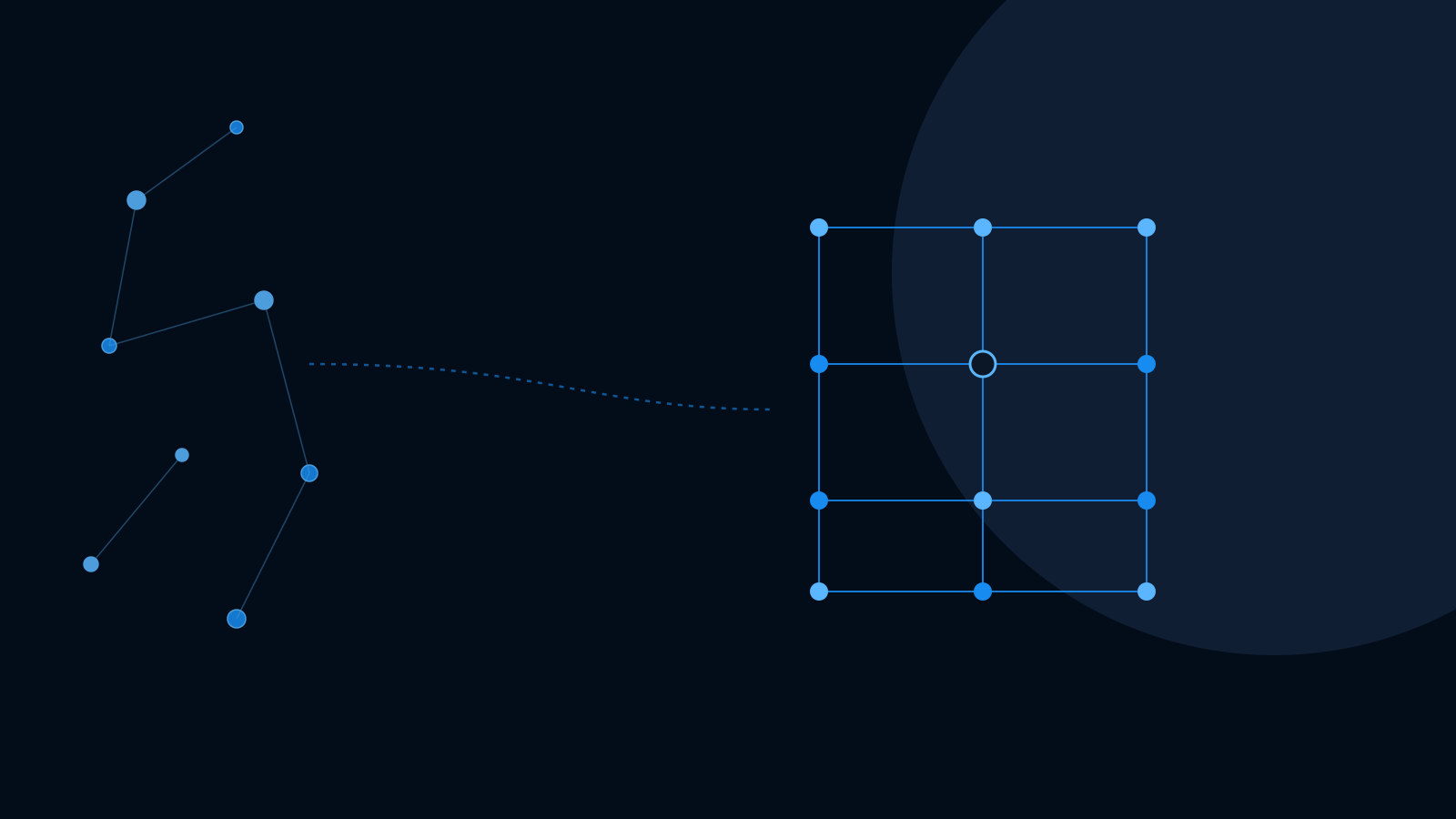
Almost every company we work with already uses AI: a chat here, an automation there, a GPT someone configured that no one maintains. And yet, processes remain manual, data lives scattered, and decisions arrive late. The mistake isn't the tools; it's the architecture. Isolated AI doesn't bring order to the business: it only speeds up the disorder that already existed.
What it really means to be AI-First
Being AI-First isn't buying the trendy tool. It's designing the operation so artificial intelligence has a clear role within a system: capturing information, classifying it, responding, recommending, automating, logging, and measuring. The difference between an experiment and an asset is exactly that: the asset operates continuously, leaves a trace, and improves with every interaction.
The 6 modules of an AI-First system
- Capture: forms, WhatsApp, landing pages, and ads flowing into a single point with complete UTM tracking.
- Classification: an AI agent assigns intent, urgency, and segment to each entry.
- Response and recommendation: the system responds or suggests the correct next step.
- Automation: n8n or Make orchestrate flows with error control and retries.
- Logging: every event is recorded in the CRM and database, not in someone's head.
- Measurement: dashboards for hours saved, conversion, and ROI by channel to decide with data.
Why architecture comes before the tool
When the architecture is designed first, every tool finds its place and its metric. When the tool is bought first, cost and complexity pile up without clarity. Good architecture design answers three questions before touching technology: which process hurts, what data feeds it, and how the return will be measured. Only then is the stack chosen.
A real case: from 11% to 28% meeting-conversion rate
A B2B SMB with six salespeople was losing 40% of its leads because follow-up depended on spreadsheets. We built an n8n + HubSpot + WhatsApp Business architecture: each lead was classified with AI, assigned by rules, and triggered a follow-up sequence with a clear owner. In eight weeks, lead-to-meeting rose from 11% to 28% and the team recovered fourteen hours a week. Zero new hires, zero extra ad budget: just architecture.
Frequently asked questions about AI architecture
- Where does an AI architecture project start?
- With a diagnosis: mapping processes, identifying the biggest value leak, and prioritizing by impact. Building comes after, never before understanding the process.
- Do I need to replace my current tools?
- Almost never. The architecture connects and orchestrates what you already have; only what generates friction or can't be integrated gets replaced.
- How long until you see a return?
- The first high-impact automations usually show hour savings within weeks. The full system is built in phases prioritized by ROI.
The next step
If your company relies on people's memory to avoid losing opportunities, you already have the problem that AI architecture solves. The first step isn't buying technology: it's understanding your operation and designing the right system. In a 30-minute diagnosis we identify where the biggest leak is and how to close it.
Keep exploring